The Canadian Story
1. A country defined by scale
Canada is the second-largest country by land area, but much of its population lives in a relatively narrow
belt near the United States border. That geography shapes almost everything: trade, politics, defence,
infrastructure, culture and climate policy. Vast distances make national cohesion both a logistical and
political project.
Canada’s rivers, forests, wheat fields, oil sands, mineral belts and Arctic coastline are not background
scenery. They are the material base of the country’s prosperity and a central reason other countries pay
attention to it.
2. History: colony, confederation, continent
Modern Canada emerged from Indigenous nations, French and British colonial settlement, military rivalry,
fur trade networks, immigration, treaty-making, railway construction and Confederation in 1867.
Its political evolution was gradual rather than revolutionary: responsible government, dominion status,
expanding provincial rights, the Statute of Westminster, postwar social programs and the 1982 patriation
of the Constitution with the Charter of Rights and Freedoms.
The national story is not simply one of peaceful compromise. It includes the displacement of Indigenous
peoples, the residential school system, language conflict, wartime internments, immigration exclusions,
western alienation and repeated debates over Quebec’s future in Canada.
3. Politics: federalism and permanent balancing
Canada’s politics are built around balancing acts: Ottawa and the provinces, English and French, regional
economies, urban and rural voters, resource development and climate policy, national standards and local
autonomy. The House of Commons determines government, while the Senate reviews legislation and the courts
interpret the Constitution and Charter.
In 2026, Prime Minister Mark Carney’s government faces a demanding agenda: economic renewal, housing,
trade pressure, Arctic security, energy transition, industrial strategy and relations with both Washington
and the provinces.
4. Economy: rich resources, stubborn productivity questions
Canada is a wealthy advanced economy with strengths in energy, mining, agriculture, finance, education,
technology, autos, aerospace and services. Its economic structure is deeply tied to the United States,
which is by far its most important trading partner.
The deeper concern is productivity. Canada has high living standards, but many economists and business
leaders worry that weak investment, regulatory delays, interprovincial barriers, infrastructure gaps and
housing costs are making the country less dynamic than it should be.
5. Housing, immigration and the urban bargain
Canada’s major cities are among the country’s greatest assets. Toronto, Vancouver, Montreal, Calgary,
Ottawa and Edmonton draw talent, investment and immigration. But the country’s housing shortage has turned
growth into a source of strain. High rents and home prices have altered the promise that hard work and
education can reliably lead to middle-class security.
Immigration remains central to Canada’s identity and labour-force strategy. The political challenge is to
preserve the broad social consensus in favour of immigration while ensuring that housing, health care,
schools and transportation can absorb growth.
6. Indigenous peoples and reconciliation
Any honest profile of Canada must begin with the fact that the country exists on Indigenous lands. First
Nations, Inuit and Métis peoples have distinct histories, rights, governments, cultures and legal claims.
The legacy of residential schools remains central to national life; the Truth and Reconciliation Commission
described the system as cultural genocide.
Reconciliation is therefore not a symbolic file. It reaches into child welfare, policing, land use,
resource development, language preservation, education, clean water, constitutional law and the meaning of
Canadian citizenship itself.

7. Culture: not one story, but many
Canada’s culture is often quieter than its neighbour’s, but it is not small. It includes Quebec’s French-language
cultural sphere, Indigenous art and literature, immigrant communities, prairie writing, Atlantic music,
northern storytelling, public broadcasting, comedy, film, hockey mythology and the everyday multiculturalism
of its largest cities.
The country’s cultural tension is familiar: how to maintain a distinct national voice next to the immense
gravitational pull of American media, capital and technology platforms.
8. Foreign policy: middle power beside a superpower
Canada is a NATO member, G7 country, Arctic state, Pacific nation, Atlantic nation and close U.S. ally.
Its foreign policy tradition has often emphasized multilateralism, peacekeeping, development, human rights
and rules-based institutions. But the world Canada faces now is harder-edged: great-power rivalry,
protectionism, cyber threats, Arctic competition and pressure to spend more on defence.
Canada’s core dilemma is influence. It is rich, stable and strategically located, but it must decide how much
military, diplomatic and industrial capacity it is willing to build in order to matter in a less predictable world.
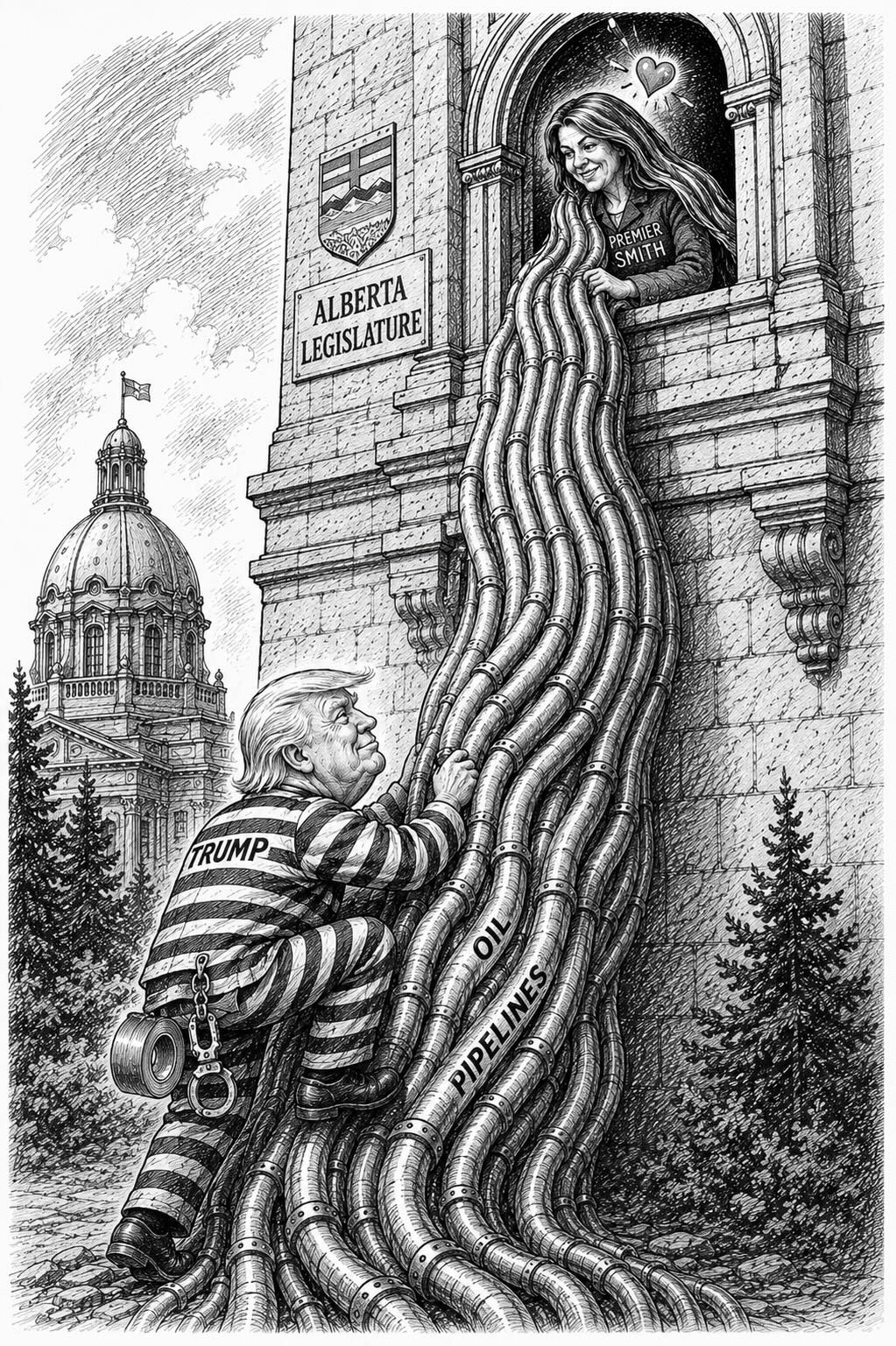
9. Energy, climate and the national argument
Few countries embody the climate dilemma as clearly as Canada. It is an oil and gas exporter, hydroelectric
power, nuclear operator, mining country, forest nation and climate-vulnerable northern state. Wildfires,
floods, heat and melting permafrost have made adaptation a practical issue, not an abstract one.
The political argument is not whether energy matters, but what kind of energy future Canada should build,
who pays for it, and whether the country can move quickly enough while keeping regions such as Alberta,
Saskatchewan and Newfoundland inside a workable national bargain.
10. Why Canada matters
Canada matters because it combines resources, geography, democratic stability, immigration capacity, Arctic
sovereignty, food production, freshwater, energy, minerals and proximity to the United States. In a world
more anxious about supply chains, borders, energy security and political trust, those attributes become more
valuable.
The question is whether Canada can convert potential into performance: building homes, defending the North,
raising productivity, advancing reconciliation, modernizing infrastructure and preserving social trust in an
age when many democracies are losing it.
Selected Timeline
Before 1500Indigenous nations flourish across the continent with diverse languages, economies, governance systems and trade routes.
1534Jacques Cartier claims land for France, beginning a long period of European imperial competition and settlement.
1867Confederation creates the Dominion of Canada, initially joining Ontario, Quebec, Nova Scotia and New Brunswick.
1885The Canadian Pacific Railway is completed, binding the country westward while also accelerating settlement and displacement.
1931The Statute of Westminster recognizes Canada’s legislative independence from Britain.
1982Canada patriates its Constitution and adopts the Charter of Rights and Freedoms.
1996The last federally run residential school closes in Saskatchewan.
2026Canada faces a new mix of pressure: housing costs, slow growth, Arctic security, U.S. trade uncertainty, energy transition and reconciliation.
Five things to watch
Housing supply
Can governments make building homes faster, cheaper and politically easier?
Arctic sovereignty
Melting ice, new shipping routes and military rivalry are raising the stakes in the North.
U.S. dependence
Canada benefits from its U.S. relationship but remains vulnerable to American politics and trade shocks.
Reconciliation
The test is whether legal recognition and public commitments produce material change.
Productivity
Canada’s prosperity depends on whether investment, innovation and infrastructure can catch up to ambition.
Energy transition
The country must reconcile climate goals with its role as a major energy and resource exporter.