The Japanese Story
1. An island nation shaped by geography
Japan is a long archipelago stretching along the Pacific edge of Asia. Its main islands — Honshu,
Hokkaido, Kyushu and Shikoku — anchor a country of mountains, coastlines, crowded plains and densely
connected cities.
Geography has given Japan protection, beauty and danger. The sea helped preserve a distinct civilization,
but the country lives with earthquakes, tsunamis, volcanoes, typhoons and limited domestic energy resources.
Adaptation to nature is not a side story in Japan. It is part of the national character.
2. History: from samurai to superpower
Japan’s long imperial tradition, feudal domains, samurai culture and shogunates produced a society that
was hierarchical, literate, artistic and highly organized. For more than two centuries under the Tokugawa
order, Japan limited contact with the outside world while developing a rich internal culture.
The Meiji Restoration of 1868 changed everything. Japan rapidly imported Western science, industry,
legal models and military methods while preserving a strong sense of national identity. Within decades it
had become a major power. Its imperial expansion then led to war across Asia and the Pacific, ending in
defeat in 1945 and the postwar reconstruction that made modern Japan.
3. Politics: stability, consensus and pressure for change
Japan is a parliamentary democracy under a constitutional monarchy. The emperor is a symbol of the state,
while elected governments operate through the National Diet, cabinet and prime minister. Postwar politics
has been marked by continuity, cautious reform and long periods of Liberal Democratic Party dominance.
That stability has helped Japan avoid sharp political lurches, but it can also slow difficult decisions.
In 2026, Prime Minister Sanae Takaichi’s government faces questions involving growth, family policy,
defence, constitutional debate, energy security, relations with China and the cost of supporting an aging society.
4. Economy: the machine that changed the world
Japan remains one of the world’s largest advanced economies. Its companies helped define modern manufacturing
through automobiles, electronics, robotics, industrial machinery, cameras, video games, rail systems and
precision engineering.
The postwar “economic miracle” made Japan a symbol of quality, efficiency and export power. The later asset
bubble and long stagnation changed that story, but not the country’s underlying strengths. Japan still matters
because its industrial base, engineering culture, capital markets and technological depth remain formidable.
5. Demographics: the future arrives early
No issue looms larger over Japan’s future than demographics. The country is aging rapidly, birth rates remain
low, and the population has been declining from its early 21st-century peak. Rural communities are shrinking,
schools are closing, and labour shortages are becoming a permanent constraint.
Japan is responding through automation, longer working lives, selective immigration, family policy, urban
redevelopment and attempts to make work more compatible with child-rearing. The world is watching because
many rich countries are moving in Japan’s direction — only later.
6. Society: order, trust and hidden strain
Japan is often admired for social order: safe streets, clean cities, punctual trains, careful service and a
deep culture of public responsibility. These qualities are supported not only by law but by shared expectations
about behaviour, respect and obligation.
Yet the same social discipline can bring strain. Long working hours, loneliness, pressure on young people,
gender inequality, rural isolation and resistance to outsiders all complicate the image of a smoothly functioning
society. Japan’s challenge is to preserve trust while becoming more flexible.
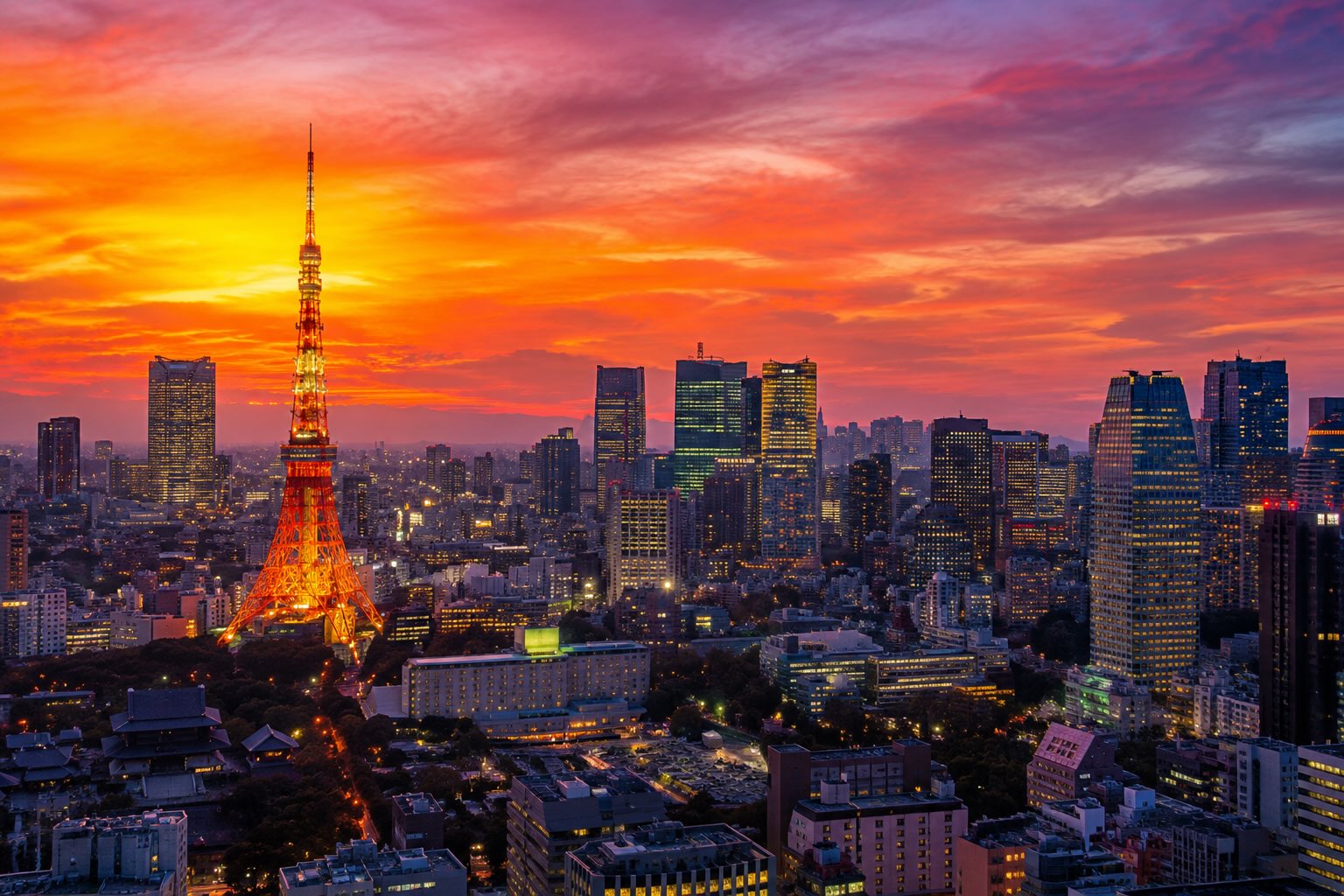
7. Culture: tradition and invention
Japan’s cultural influence is extraordinary. It includes Shinto shrines, Buddhist temples, tea ceremony,
calligraphy, kabuki, noh theatre, gardens, ceramics, cuisine, festivals and the refined aesthetics of old Kyoto.
It also includes anime, manga, video games, fashion, film, design, pop music and consumer technology. Japan’s
cultural power comes from an unusual ability to protect tradition while continually inventing new forms. Few
countries appear so old and so futuristic at the same time.
8. Foreign policy: America, China and the Indo-Pacific
Japan is a central democratic power in Asia and a cornerstone of the American alliance system. U.S. forces in
Japan, especially in Okinawa, remain central to regional security. At the same time, China is both a vital
trading partner and Japan’s most important strategic competitor.
Tensions over Taiwan, the East China Sea, North Korea’s missiles and maritime security have pushed Japan toward
a more active defence posture. The country is increasing military capability while still operating within the
shadow of its pacifist postwar constitution and the memory of wartime history.
9. Energy, technology and resilience
Japan imports most of its energy, making security of supply a permanent national issue. The 2011 earthquake,
tsunami and Fukushima nuclear disaster forced a profound debate over nuclear power, renewable energy, safety,
climate policy and dependence on imported fuel.
Technology remains Japan’s strategic answer to scarcity. Robotics, advanced materials, machine tools,
batteries, rail engineering, semiconductors and precision manufacturing all reflect a national habit: solving
problems through improvement, miniaturization, reliability and systems thinking.
10. Why Japan matters
Japan matters because it shows how a country with limited natural resources can become rich, influential and
technologically advanced through education, organization, industrial policy, social trust and relentless improvement.
It is a major economy, a democratic anchor in Asia, a cultural superpower, a technological force and a preview
of the aging future facing much of the developed world. Japan’s next reinvention will shape not only its own
place in the world, but the balance of power in the Indo-Pacific.
Selected Timeline
Before 700Early Japanese states and imperial institutions emerge, drawing on indigenous traditions and influences from China and Korea.
1185The Kamakura shogunate begins the long era of samurai-led military government.
1603The Tokugawa shogunate establishes more than two centuries of stability, hierarchy and relative isolation.
1868The Meiji Restoration launches rapid modernization, industrialization and state-building.
1905Japan defeats Russia, confirming its arrival as a major imperial power.
1945World War II ends after the atomic bombings of Hiroshima and Nagasaki and Japan’s surrender.
1950s-1980sJapan’s economic miracle transforms the country into an industrial and technological giant.
2011A devastating earthquake and tsunami trigger the Fukushima nuclear disaster and a national energy debate.
2026Japan faces demographic decline, regional security tensions, energy pressure, defence expansion and the search for renewed growth.
Five things to watch
Population decline
Can Japan make family life, work and housing compatible with a higher birth rate?
Defence expansion
Japan is becoming a more active security power in a more dangerous region.
China relationship
Trade, rivalry, history and maritime disputes keep the relationship central and difficult.
Robotics and AI
Automation may help offset labour shortages, but it cannot solve every demographic problem.
Economic renewal
Productivity, wages, investment and innovation will determine Japan’s next phase.
Energy security
The balance among nuclear power, renewables, imports and climate goals remains unsettled.